
 By Oscar Woods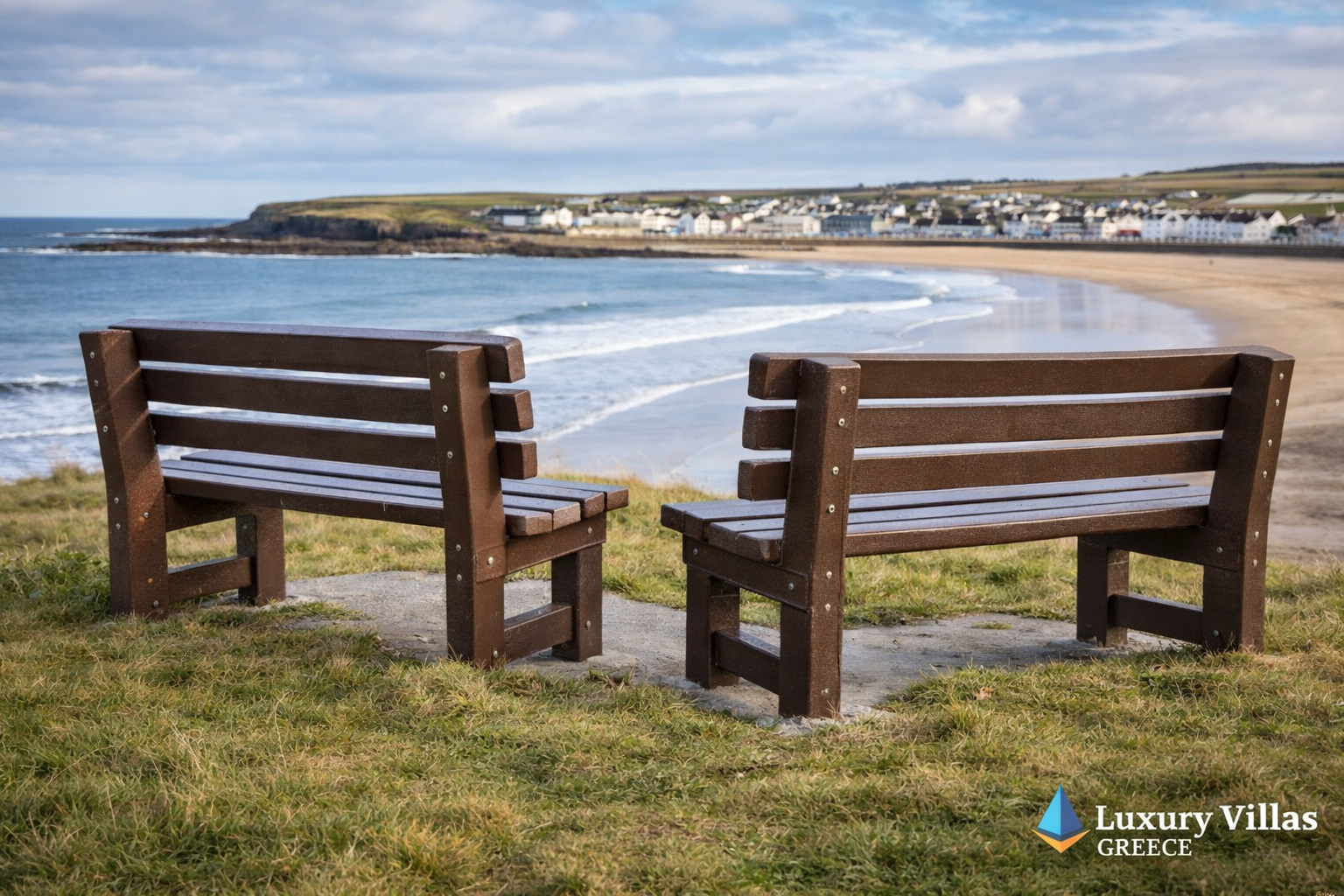
Kilkee benches replaced plastic materials are stirring up strong reactions in this seaside town in County Clare, Ireland. The recent switch has locals questioning whether progress means sacrificing tradition.
Table of Contents
Traditional Benches Make Way for Modern Substitutes
Clare County Council removed around 20 traditional wooden benches from Kilkee’s seafront in recent weeks. The replacements? Brown recycled plastic benches that look nothing like what residents have known for decades.
The removed benches held special meaning for the community. They were painted in blue and white, the GAA colors representing the local area. These weren’t just places to sit. They were landmarks painted in colors that connected residents to their sporting heritage and town identity.
Where the Changes Happened
Key locations affected include:
- Four benches removed from the promenade in front of the Esplanade
- One bench taken from the green area beside the old Strand Hotel
- Several benches removed at George’s Head car park
- Additional removals at the Kilkee Bandstand
The Case for Recycled Plastic
Recycled plastic benches have become common in public spaces across Ireland and beyond. The council likely chose them for practical reasons that many municipalities consider.
These benches require almost no maintenance. Unlike wood, they don’t need regular painting, staining, or treatment to prevent rot. They can withstand coastal weather conditions without warping or deteriorating from salt air and moisture.
The material itself comes from recycled plastics like milk jugs and bottles. In theory, each bench diverts thousands of plastic containers from landfills. Some manufacturers claim these benches can last 50 years or more without replacement.
What Residents Are Saying
The people who live in Kilkee are not celebrating this change. The brown plastic benches represent more than just different materials to them.
Locals describe feeling upset that distinctive features of their town vanished without consultation. The blue and white benches were part of what made Kilkee’s seafront recognizable. Visitors and residents alike knew those colors.
Beyond appearance, there’s the question of character. A Victorian seaside village loses something when historic elements get swapped for generic alternatives, no matter how practical those alternatives might be.
Understanding the Broader Context
Kilkee has been a popular seaside resort since the early 19th century. The town attracted wealthy visitors who came by paddle steamer from Limerick to enjoy the protected horseshoe bay. Later, the West Clare Railway brought even more tourists.
The town still relies heavily on tourism. Its beach regularly earns Blue Flag status from the European Commission. The cliff walks, natural swimming pools called the Pollock Holes, and the overall Victorian character draw thousands of visitors each year.
Changes to public spaces in tourist destinations always create tension between preservation and modernization. Both sides have valid points.
The Sustainability Question
Recycled plastic sounds environmentally friendly on the surface. These benches use waste material and require no ongoing chemical treatments or replacement lumber.
But sustainability isn’t just about material composition. It also involves community connection to place. When people feel disconnected from their environment, they care less about maintaining it.
The wooden benches required more maintenance, yes. But that maintenance involved local workers and preserved traditional craftsmanship. The blue and white paint created visual continuity that reinforced local identity.
What Happens Next
Clare County Council hasn’t issued detailed public statements explaining the decision or responding to resident concerns, based on available reporting.
The benches are installed. Whether the council will consider community feedback for future decisions remains unclear. Some residents may push for a reversal or compromise, such as painting the plastic benches in the traditional colors.
Towns across Ireland face similar decisions regularly. Budget constraints push councils toward low maintenance options. Residents push back when changes feel imposed rather than collaborative.
Lessons from Other Communities
Other Irish towns have found middle ground in similar situations. Some use recycled plastic for functional areas while preserving traditional materials in historic districts. Others involve residents in decision making before making changes.
The Kilkee situation highlights how infrastructure decisions affect community identity. Benches aren’t just furniture. They’re gathering places, viewpoints, and physical connections to local heritage.
Finding Balance
Modern materials offer real benefits. Lower maintenance costs free up budgets for other needs. Recycled content addresses waste problems. Durability means less frequent replacement.
Traditional materials offer different benefits. They maintain character and distinctiveness. They support local craftspeople. They create visual harmony with historic architecture.
Smart communities find ways to honor both priorities. That might mean using modern materials in new developments while preserving traditional elements in historic areas. It could involve community input processes that catch potential conflicts early.
For Kilkee benches replaced plastic now sits where painted wood once stood. The practical benefits are clear. Whether those benefits outweigh what was lost depends on who you ask. Time will tell if the community adapts or continues pushing for change that better reflects their values and identity.
The conversation continues along the seafront, where residents and visitors now sit on brown plastic instead of blue and white wood, watching the same Atlantic waves that have always defined this Victorian town.