
 By Oscar Woods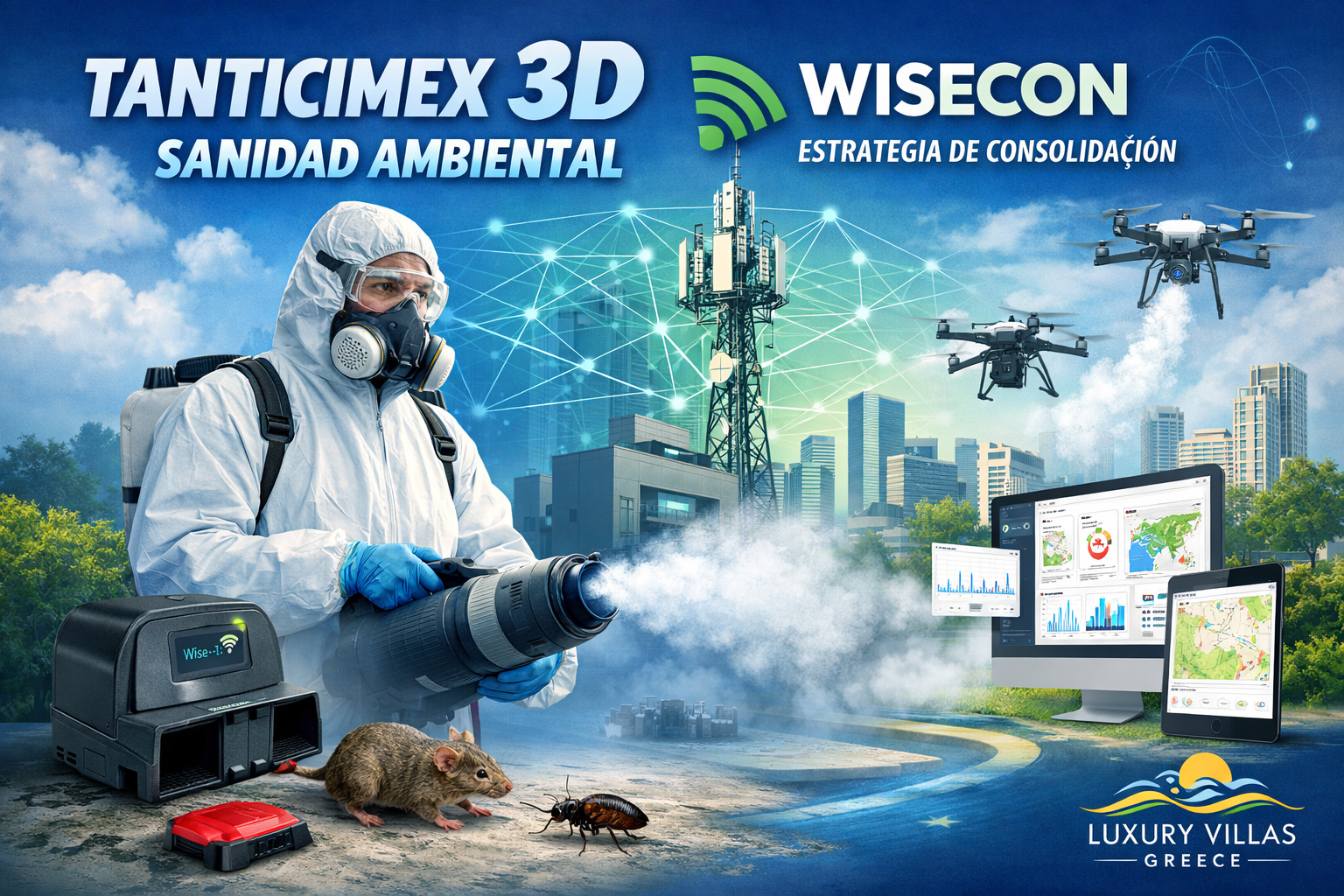
By the time most pest control companies noticed what was happening, Anticimex had already built a 10-year head start.
Spain’s largest digital pest management operation, Anticimex 3D Sanidad Ambiental, closed 2024 with €72 million in revenue — a 30% jump year over year. That growth did not happen through luck or favorable market conditions. It traces directly back to a consolidation strategy that began with a small Danish technology firm that few in the industry thought worth buying.
Table of Contents
The Acquisition That Looked Risky — Until It Didn’t
In January 2015, Anticimex Group acquired a 20% stake in WiseCon, a Helsinge-based manufacturer of wireless electronic rodent traps with just 110 employees. Industry veterans at the time were skeptical. Electronic traps cost far more than conventional methods, and commercial adoption rates were minimal.
Two and a half years later, in April 2017, Anticimex bought the remaining 80%. The full acquisition price was never disclosed publicly.
What happened next is what made the move significant. Instead of folding WiseCon into a standard supplier relationship, Anticimex converted its 50-person engineering team into the Anticimex Innovation Centre, a dedicated R&D unit responsible for hardware, software, and data analytics across the entire group.
That decision gave Anticimex ownership of both the technology layer and the service delivery layer simultaneously — a combination that competitors have struggled to replicate.
How the SMART Platform Became the Core of the Consolidation Strategy
The WiseCon technology forms the backbone of what Anticimex now calls its SMART platform, deployed across 22 countries. In Spain alone, 22,500 connected devices operate across client sites. Globally, that figure reached 500,000 installed units by the end of 2024.
The system works without customer Wi-Fi. SMART Connect units build their own mesh radio networks inside buildings. Sensors detect heat signatures, pest movement, and environmental changes, then transmit data to centralized servers. Technicians receive immediate alerts rather than showing up on fixed monthly schedules.
Key components of the platform:
- Smart Connect — creates building-level wireless mesh networks for device communication
- Smart Eye Mini — passive infrared sensors mounted in ceiling voids, wall cavities, and subfloors
- Smart Snap — spring-mechanism traps that kill instantly, eliminating the 3 to 7 day poisoning window associated with anticoagulant rodenticides
- Smart Sense — detects cockroaches and moths using species-specific pheromones combined with thermal detection
The shift from reactive service calls to continuous digital monitoring changed the revenue model entirely. Subscription fees from sensor networks produce predictable monthly income. One-time service visits do not.
35 Acquisitions Since Entering Spain — Seven in 2024 Alone
Anticimex 3D Sanidad Ambiental entered Spain in 2013. Since then, the company has completed 35 acquisitions, adding regional operators across the country and absorbing their client bases into the SMART monitoring platform.
In 2024, seven companies joined the portfolio:
| Company | Location |
|---|---|
| Actual Control | Mallorca |
| Oiarso Control de Plagas | Donostia |
| Anema | Girona |
| Biotecnos | Málaga |
| Plaserman | Valencia |
| GTSA | Extremadura |
| Ecotècnic | Andorra |
Together, those seven purchases contributed €4 million to annual revenue. The remaining 24% organic growth came from existing operations — nearly triple the 8% to 12% average reported for Spanish pest management companies.
Josep Valls, director general of Anticimex España, credited the sensor network for shortening commercial sales cycles. Public sector contracts also grew. The Ayuntamiento de Arucas in Gran Canaria installed Smart Pipe units throughout its municipal sewer system in late 2024, replacing anticoagulant baiting programs restricted under 2023 EU environmental directives. Similar municipal contracts are running in Barcelona, Valencia, and Sevilla.
Regulatory Pressure Is Accelerating the Market Shift
Spain tightened controls on outdoor anticoagulant rodenticide use in 2023, requiring licensed applicators and limiting placement zones. European Union directives on secondary poisoning risks to raptors and scavengers pushed many operators to reconsider chemical-heavy approaches.
Mechanical and sensor-based systems avoid those restrictions entirely. Food processing facilities, pharmaceutical plants, and hospitals — where chemical contamination creates unacceptable compliance risk — became early adopters of the SMART platform for exactly this reason.
Digital documentation and audit-ready reporting, which the platform generates automatically, reduced manual administrative overhead while satisfying inspection requirements from EU food safety authorities.
Where the Competition Stands — and What Comes Next
Anticimex Group operates under private equity ownership by EQT Partners. Group-level revenue exceeded €1.5 billion in its most recent fiscal year across 11,000 employees in 22 countries. The Spanish division accounts for roughly €72 million of that total and is projected to reach €80 million in 2025.
The company allocates approximately 15% of annual profits to R&D at two facilities: the Innovation Centre in Denmark and a secondary research site in Sabadell, near Barcelona. Industry competitors typically invest 2% to 3% in product development.
That gap in investment, combined with eight years of accumulated behavioral data across different building types, climates, and seasonal patterns, represents the real competitive position. New entrants would need years to build comparable datasets.
The patent situation adds urgency. Core WiseCon sensor patents expire between 2026 and 2029. Chinese manufacturers already produce lower-cost alternatives, though none currently integrate the software analytics layer. Whether the network effects and data depth Anticimex has accumulated provide durable protection after patent expiry is the central question facing the business over the next three years.
What the Anticimex 3D Sanidad Ambiental / WiseCon Consolidation Strategy Tells the Industry
The pattern here is worth understanding on its own terms. Anticimex did not wait for digital pest control to become obvious before acting. It bought into sensor technology in 2015, when the market was not ready, then spent seven years building the infrastructure, the client base, and the data before revenue growth became visible.
The consolidation approach — acquiring regional operators and converting their contracts to subscription-based monitoring within 90 days of closing — turned every acquisition into both a revenue addition and a platform expansion. Each new location added data points. Each new dataset improved predictive accuracy for all locations.
Spain became the clearest proof of concept. 33 regional delegations, 1,012 employees, more than 30,000 clients. The numbers behind the Anticimex 3D Sanidad Ambiental / WiseCon estrategia de consolidación are now large enough that the model is no longer a hypothesis.