
 By Oscar Woods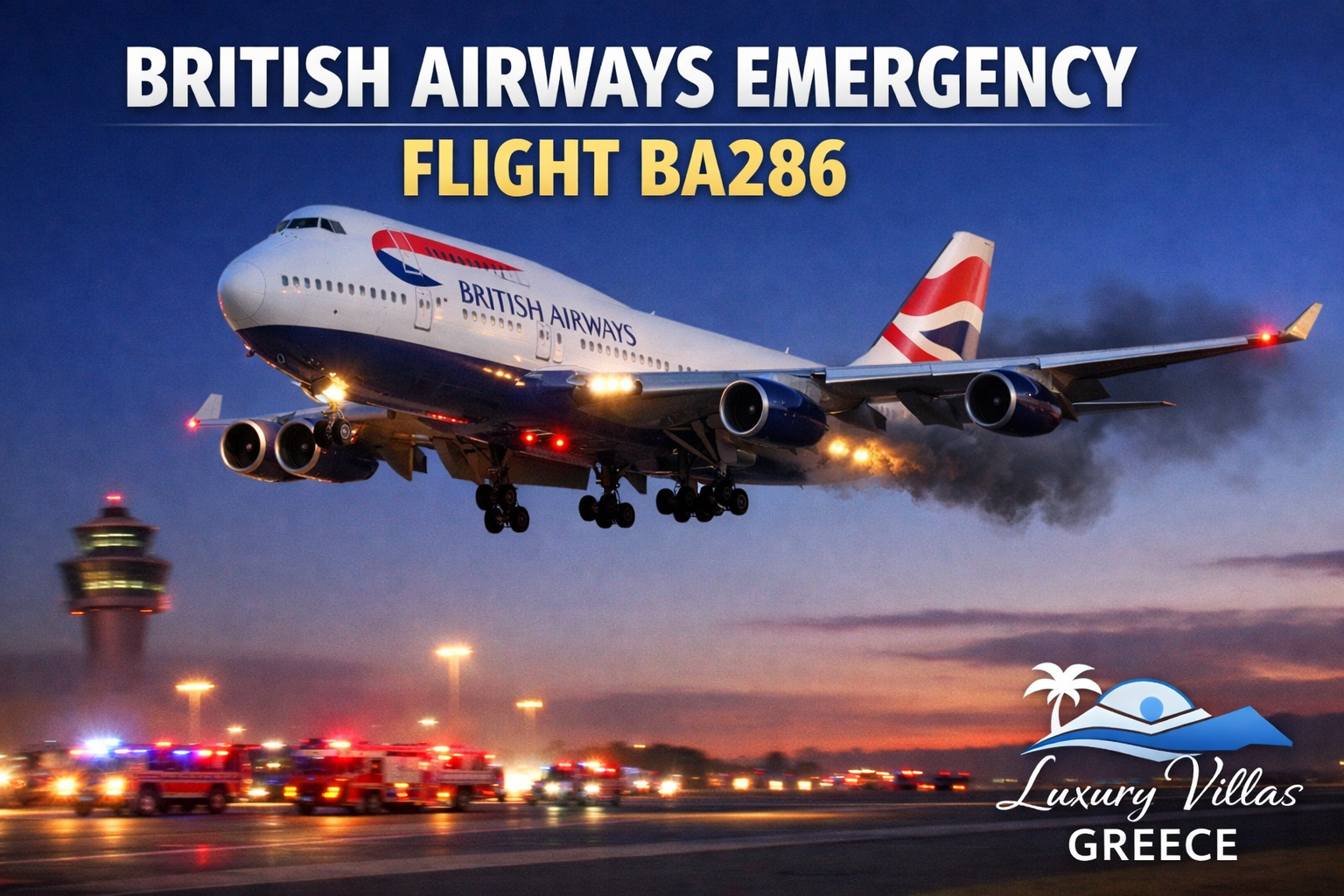
A routine overnight flight from San Francisco to London turned into an emergency when the crew of BA286 declared squawk 7700 over Scotland. Here is exactly what happened, how it was handled, and what it tells us about aviation safety.
41,000 Altitude in feet over Scotland
7700 Transponder emergency code declared
13:39 BST safe landing, runway 27L
G-XLEG Aircraft registration, Airbus A380
British Airways emergency flight BA286 departed San Francisco International Airport on the evening of May 26, 2025, at 19:33 PDT. By all measures, the overnight transatlantic sector looked completely standard. Passengers settled in aboard the Airbus A380, registration G-XLEG, and the plane climbed toward its cruise altitude for the roughly 10-hour journey to London Heathrow.
Then, over Scotland, things changed fast.
Table of Contents
What Triggered the Emergency Declaration
While cruising at 41,000 feet, the flight crew of BA286 entered transponder code 7700, known in aviation as squawk 7700. According to AirNav Radar, who tracked the incident in real time, the reason was a medical emergency on board. The code immediately flagged the flight as a priority across every air traffic control sector along the route.
“British Airways flight BA286, operating an Airbus A380, declared a general emergency while en route from San Francisco to London Heathrow on May 27, 2025.”
AirNav Radar • May 27, 2025
Squawk 7700 is not used for minor disruptions. Pilots set this code when a situation has escalated to the point where immediate support from air traffic control is required. In this case, a passenger on board was experiencing a serious medical episode that needed professional attention as soon as possible. The crew also activated the airline’s telemedicine system, consulting ground-based doctors while still airborne over the North Atlantic.
The Response on the Ground
The moment that four-digit code appeared on radar screens, air traffic controllers began clearing a path. BA286 was given priority routing and a direct approach to Heathrow. Emergency teams at Terminal 5 were placed on standby, and medical personnel were positioned at the gate before the aircraft even touched down.
Timeline of Events
- May 26, 19:33 BA286 departs San Francisco on schedule aboard Airbus A380 G-XLEG
- May 27, overnight Aircraft crosses the North Atlantic, cruising at 41,000 feet
- Over Scotland Crew declares squawk 7700 due to a medical emergency on board
- 13:39 BST BA286 lands safely on runway 27L at London Heathrow
- 13:48 BST Aircraft parks at stand C56; medical teams board immediately
- Post-landing No technical fault found; confirmed as a medical incident
The flight touched down safely at 13:39 BST on runway 27L, and was at its stand, C56, by 13:48. Medical teams were on board within minutes. According to AirLive, which reported the incident as it developed, there were no structural or mechanical issues with the aircraft. The investigation confirmed this was entirely a medical situation.
Why the Captain Did Not Divert
One of the more interesting aspects of this incident is the decision not to divert. When squawk 7700 is declared mid-Atlantic, pilots have two choices: continue to the destination or land at the nearest suitable airport. The captain of BA286 consulted with the medical team on the ground and assessed the passenger’s condition. With Heathrow only a short time away and its superior medical infrastructure ready, continuing to London was the safer call.
This is standard protocol. Airlines do not divert as a reflexive response. The captain weighs remaining flight time, the condition of the patient, available medical facilities at both the diversion point and the destination, and the aircraft’s fuel state. In this case, all of those factors pointed toward Heathrow.
A Previous Incident on the Same Route
BA286 has appeared in emergency headlines before. In October 2016, the same San Francisco to London route made international news when the flight diverted to Vancouver after 25 crew members became ill mid-flight. ABC News reported at the time that 22 cabin crew members and three pilots were taken to local hospitals in Vancouver. A pilot on that flight was heard on an air traffic control recording saying he detected what he described as toxic fumes. British Airways declined to comment on the recording at the time. All 25 crew members were later released from hospital.
The two incidents are unrelated. The 2016 diversion involved potential air quality concerns affecting the crew, while the 2025 emergency was a passenger medical situation with no technical component. Still, the same flight number generating two separate emergencies years apart has kept BA286 on the radar for aviation watchers and frequent flyers on this transatlantic corridor.
What Passengers Need to Know
If you were on board BA286 during the May 2025 incident, or find yourself on a flight that declares an emergency, here is what the rules say:
- Care and assistance must be provided by the airline under UK Regulation 261, including meals, accommodation, and rebooking where required.
- Financial compensation is typically not applicable. Medical emergencies fall under extraordinary circumstances outside the airline’s control.
- Keep your receipts. If the disruption causes additional expenses like hotels or meals, document everything and submit a claim to British Airways.
British Airways emergency flight BA286 ended without loss of life and without any mechanical failure. What it demonstrated, more than anything, is how layered the safety response is on a modern long-haul flight. From the crew’s medical training and onboard equipment like automated external defibrillators, to the telemedicine connection with ground doctors, to the air traffic control response that cleared the airspace in real time, every part of the system functioned as designed.
British AirwaysFlight BA286Squawk 7700Airbus A380Medical EmergencyLondon HeathrowTransatlantic Flight
The Route
SFOSan Francisco
✈
LHR London Heathrow
Departs: 19:33 PDT~10 hrs
Transponder Codes
7700 General emergency. Any serious situation requiring immediate priority from ATC.
7600 Loss of radio communication with air traffic control.
7500 Unlawful interference or hijacking in progress.
Aircraft Details
Type Airbus A380-841
Registration G-XLEG
Operator British Airways
Fleet (2025)12 A380s; 10 active
Cruise Altitude 41,000 feet on May 27, 2025
Capacity Up to 469 passengers