
 By Oscar Woods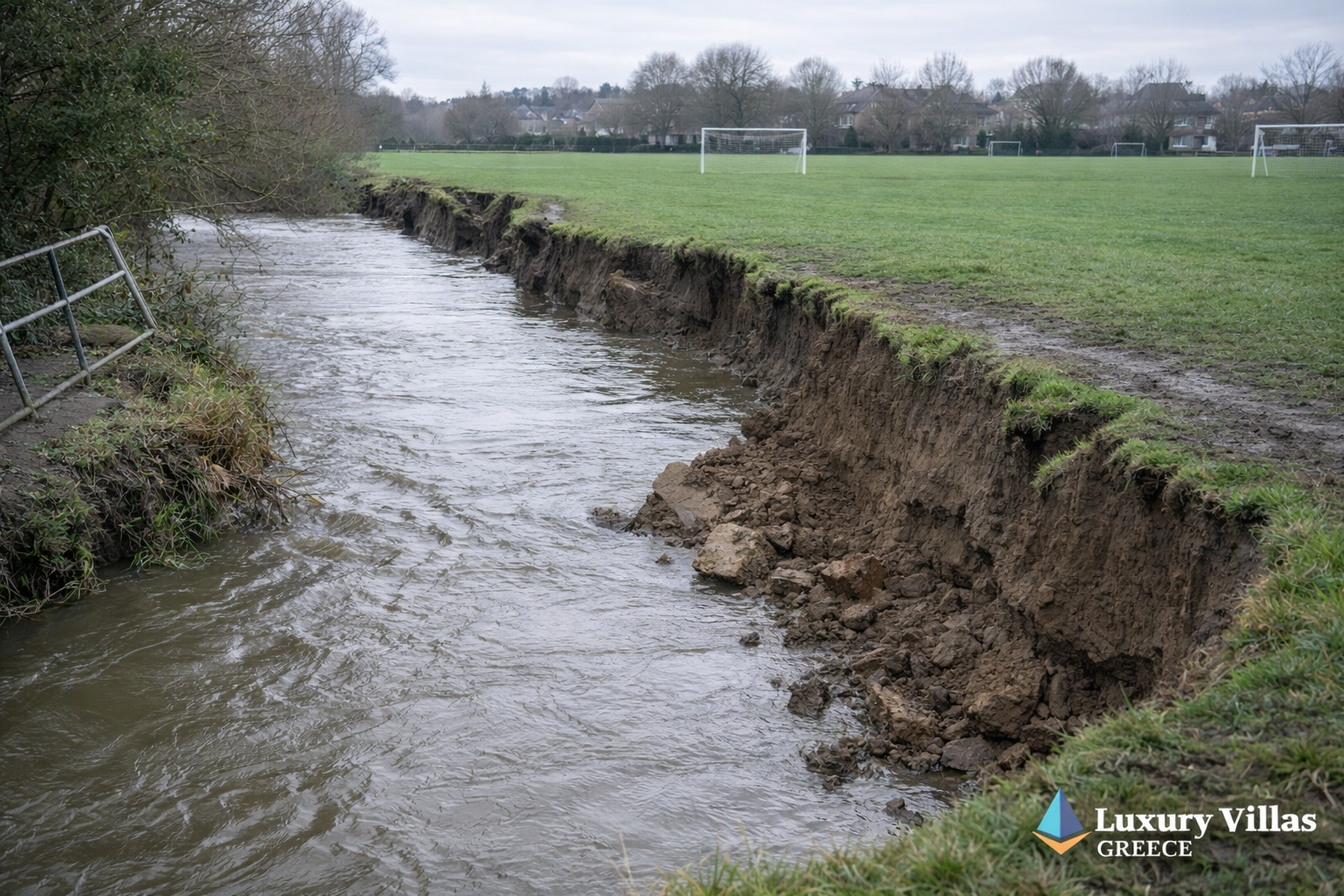
A riverbank collapse at Iford Playing Fields near the River Stour has disrupted community activities and raised questions about the environmental pressures facing riverside green spaces in Christchurch.
Table of Contents
What Happened at Iford Playing Fields
The riverbank collapse iford playing fields incident occurred along a stretch of the River Stour adjacent to the popular recreation area. Sections of the riverbank gave way, sending soil, trees, and vegetation into the water below. The collapse left visible damage to the landscape, with portions of the playing fields now cordoned off as authorities assess the situation.
Iford Playing Fields serves as home ground for East Dorset Dockers RFC and provides recreational space for local families, dog walkers, and sports enthusiasts. The sudden erosion has disrupted normal use of the area and prompted safety warnings from local officials.
Understanding Riverbank Erosion and Collapse
Riverbanks change naturally over time as water flows past, gradually removing soil and reshaping the landscape. But when conditions align in certain ways, these gradual changes can turn into sudden failures.
Key Factors Behind Bank Failures
River erosion happens continuously as flowing water removes soil particles from the bank. Along the Stour, this natural process becomes more pronounced during periods of high water flow. When the river rises after heavy rainfall, the increased force against the bank accelerates soil removal.
Soil saturation plays a major role. Extended periods of rain waterlog the ground, reducing its internal strength. Saturated soil becomes heavy and unstable, losing the ability to hold together under pressure. Combined with erosion at the base of the bank, this creates conditions where collapse becomes likely.
Vegetation matters more than many people realize. Deep-rooted plants and trees anchor soil in place through their root systems. When vegetation is removed or replaced with shallow-rooted grass, that natural reinforcement disappears. The soil becomes more vulnerable to washing away.
The River Stour’s Flooding History
The Dorset Stour has a well-documented pattern of flooding, particularly in its lower reaches near Christchurch. During the winter floods of 2013 and 2014, the river burst its banks and forced the evacuation of 100 residents from the area.
More recently, the region experienced significant flooding in November 2024 when rising river levels led to evacuations at Iford Bridge Home Park. Just weeks ago in January 2025, the Environment Agency issued flood warnings for areas including Iford Bridge as storms Herminia and Éowyn brought heavy rainfall to the region.
The River Stour drops approximately 750 feet over its 60-mile course from source to estuary. Because much of the river flows across clay soil, water levels can vary dramatically between seasons. Low summer flows support diverse habitats and rare plants, while winter often brings flooding across the wide floodplains.
Impact on the Community
Recreational Disruption
Sports teams at Iford Playing Fields, including the East Dorset Dockers rugby club, rely on safe access to the grounds for training and matches. Bank collapse creates both immediate safety hazards and longer-term uncertainty about when full use of the facilities can resume.
Local residents who use the riverside paths for walking and exercise now face detours and restricted access. The incident affects daily routines and reduces available green space in a community that values these outdoor areas.
Environmental Effects
When riverbanks collapse, large amounts of sediment enter the water. This cloudiness reduces sunlight penetration and lowers oxygen levels, affecting fish and other aquatic life. The sudden deposit of soil can smother habitats on the riverbed and disrupt the ecosystem.
Loss of bankside vegetation removes shelter and food sources for wildlife. Trees and plants that once stabilized the bank and supported local species are gone, changing the character of the riverside environment.
What Comes Next
Stabilizing damaged riverbanks requires careful planning that balances engineering solutions with ecological needs. Traditional approaches might include gabion baskets or retaining structures to hold soil in place. More nature-based methods could involve replanting with deep-rooted native species like willow, which naturally bind and protect the bank.
Local authorities will need to assess the extent of damage and determine appropriate restoration strategies. In some cases, accepting minor changes to the river’s course while protecting key infrastructure offers a practical middle ground.
Broader Context: Climate and River Management
The riverbank collapse iford playing fields incident reflects patterns seen across the UK. More intense rainfall events, even when total annual rainfall stays similar, put extra stress on riverbanks. When water comes in concentrated bursts rather than steady amounts, rivers rise faster and exert greater force on their banks.
Managing these pressures requires thinking beyond individual sites. Upstream land use, drainage patterns, and floodplain management all influence how rivers behave downstream. Communities near rivers face ongoing challenges in balancing human use of riparian areas with the need to let natural systems function.
The situation at Iford Playing Fields serves as a reminder that our relationship with rivers requires constant attention and adaptation as conditions change.