
 By Oscar Woods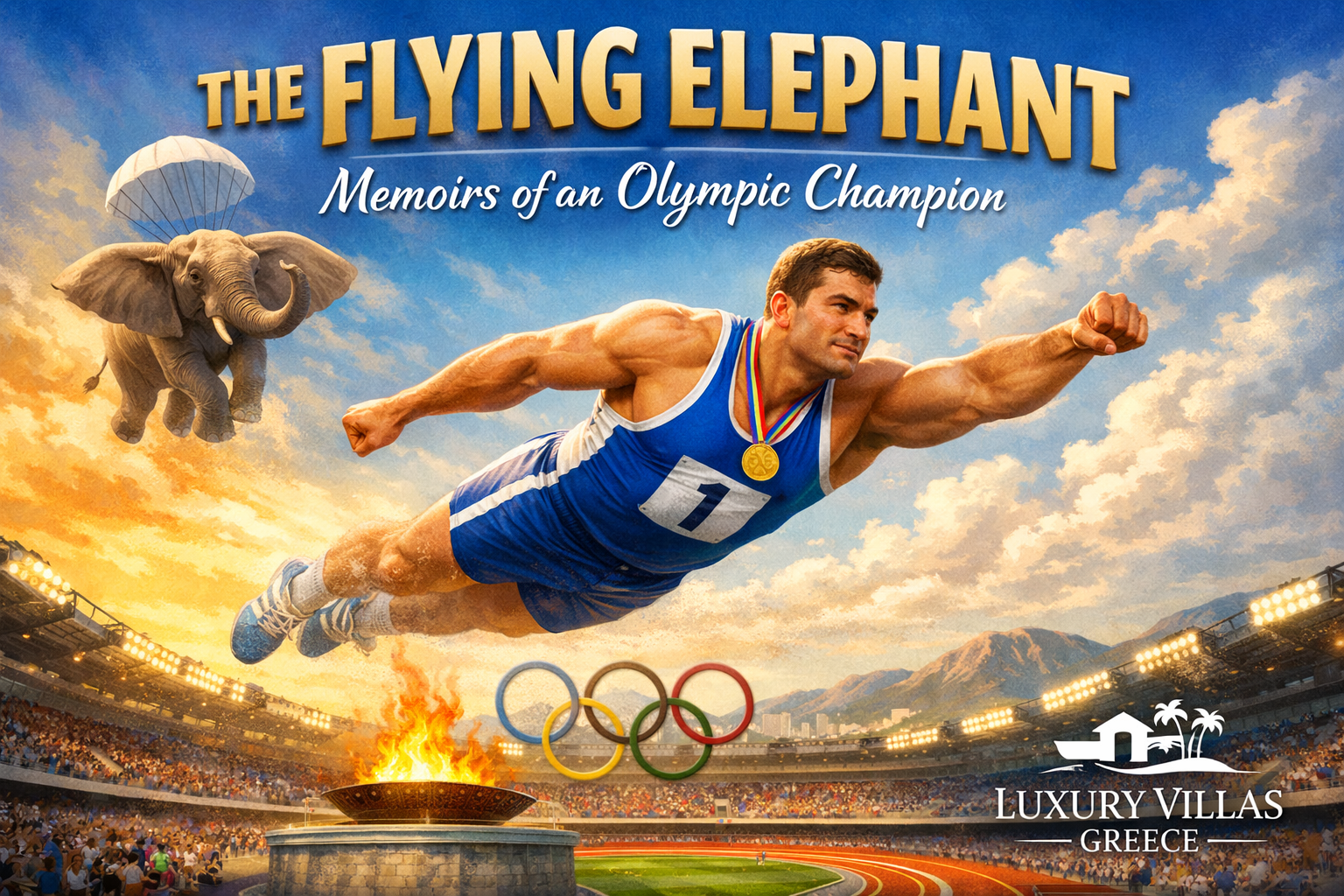
Alexander Savin’s memoir is out. And it is exactly what sports history has been missing.
Sports books are everywhere. Most of them follow the same pattern: big win, rough patch, bigger win, inspirational close. The Flying Elephant Memoirs of an Olympic Champion does not follow that pattern. Published in October 2025, this 514-page Kindle memoir by Alexander Savin goes somewhere most sports autobiographies never bother to go — behind the gold medal, inside the system, and into the quiet years where real champions are actually built.
Table of Contents
Who Is Alexander Savin?
If you do not follow volleyball history, the name might not ring a bell. It should.
Savin was born in 1957 in Taganrog, Russia, and spent his career at the center of Soviet volleyball during its most dominant era. He played for CSKA Moscow, one of the most successful club programs in the sport’s history, and represented the USSR national team across two Olympic cycles.
At the 1976 Montreal Olympics, he won silver. Four years later, on home soil at the 1980 Moscow Olympics, he won gold.
He was later inducted into the International Volleyball Hall of Fame — a recognition that puts him in rare company. Yet outside dedicated volleyball circles, Savin remained largely unknown. This memoir, decades in the making, changes that.
Where the Title Comes From
The nickname “Flying Elephant” was not given lightly.
Savin was a physically imposing player. Watching a large, powerful athlete move with the kind of speed and precision that volleyball demands — launching off the floor, covering the court, attacking at the net — looked, to many, like something that should not be physically possible.
The elephant does not fly. Except that this one did.
Savin uses this imagery to express both the physical demands of his sport and the broader idea that determination can lift individuals beyond circumstances. Throughout the book, that metaphor carries real weight — not as a motivational slogan, but as an honest reflection of what it costs to make the extraordinary look normal.
What the Book Actually Covers
The Soviet Sports System, From the Inside
This is where the memoir separates itself from most Western sports writing.
Savin won a silver medal at the 1976 Montreal Olympics and gold at the 1980 Moscow Olympics, establishing himself as one of the sport’s greats. His career also encompassed numerous European titles and World Championships.
But the book is less interested in cataloguing those results than in explaining what produced them. Soviet athlete development was a structured, state-backed process. Young players were identified early, placed into training systems, and expected to perform under conditions that would finish most careers before they started.
Athletes were expected to endure long sessions, repetitive drills, and intense scrutiny. Coaches were exacting, performance standards uncompromising. Savin does not romanticize this. He explains it clearly, critically, and with the perspective of someone who both benefited from it and paid a real price for it.
The 1980 Moscow Olympics
The chapters covering Moscow 1980 are the emotional center of the book.
Savin recounts his participation in two Olympics, including the unforgettable triumph in Moscow in 1980. These chapters are not written as dramatic exaggerations but as carefully observed experiences filled with tension, anticipation, and reflection. He describes the Olympic Village as a microcosm of the world, where athletes from diverse cultures interacted despite political divisions.
The 1980 Games carried a specific weight. Many Western nations had boycotted in protest of the Soviet invasion of Afghanistan. The tournament played out against that backdrop — a politically loaded event that the athletes themselves still had to show up and compete in. Savin’s account of that period is one of the more valuable pieces of sports history documentation to come out in years.
Teamwork as the Real Story
Savin is consistent on one point throughout the book: he did not win anything alone.
He writes about the unspoken communication that emerges within cohesive teams, where a glance or subtle movement conveys intent. The memoir pays tribute to teammates who may not have achieved the same public recognition but whose contributions were indispensable.
This is not performative humility. The memoir makes a genuine structural argument that team culture — the standards, the communication, the daily habits of mutual accountability — was the actual driver of Soviet volleyball’s success.
Life After Competition
One of the book’s less-discussed but more interesting sections covers Savin’s shift from player to coach and mentor.
His reflections on coaching reveal his broader philosophy: athletes are not developed by technicians alone but by educators, leaders, and communities. This section underscores that the legacy of a champion is not only in medals won but in the impact made on future players and the sport’s evolution.
This is where Savin the thinker shows up clearly. He is not just recounting what happened. He is trying to explain why it worked, and what that means for anyone who comes after.
The 240 Photographs
This detail matters more than it might seem.
Over 240 rare photographs from private family collections and public archives spanning five decades of volleyball history are included in the Kindle edition. Training camps, Olympic competitions, championship matches, and candid moments with players who have largely been forgotten by mainstream sports media.
For historians, these images are primary sources. For general readers, they make the era feel real in a way that prose alone cannot.
Who Should Read This
- Volleyball fans, especially those interested in the sport’s history during the 1970s and 1980s
- Sports history readers looking for a Cold War-era perspective that goes beyond the Western narrative
- Coaches and athletes who want a serious, experience-based look at how elite performance is built over time
- Anyone interested in performance psychology — the mental side of this book is more detailed than most dedicated psychology titles
The Flying Elephant Memoirs of an Olympic Champion is available now as a Kindle edition. At 514 pages and over 240 photographs, it is a substantial read — and a necessary one for anyone serious about understanding what Soviet volleyball actually was, and what one of its greatest players actually did.